Friday, February 28, 2020

WHAT ARE DENTAL IMPLANTS?

WHAT ARE DENTAL IMPLANTS?
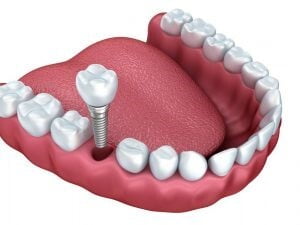
Dental implants as we know them today were invented in 1952 by a Swedish orthopedic surgeon named Per-Ingvar BrÃ¥nemark. Today, they are considered the standard of care for prosthetic replacement of missing teeth.
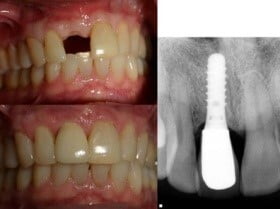
In dentistry, a dental implant is a surgical fixture that is placed into the jawbone and allowed to fuse with the bone over the span of a few months. It acts as a replacement for the root of a missing tooth. In turn, this "artificial tooth root" serves to hold a replacement tooth.
Having a dental implant fused to the jawbone is the closest thing to mimicking a natural tooth because it stands on its own without affecting the nearby teeth and has great stability. Most dental implants are made of titanium, which allows them to integrate with bone.

ARE IMPLANTS SAFE AND HOW LONG WILL THEY LAST?
Implants are a safe, well-established treatment. Much like natural teeth, implants will last for as long as you care for them.
How well you look after your implants, and whether you go for your regular maintenance appointments will have the biggest impact on how long they will last. If you don't look after your implants they will develop a coating similar to what you get on neglected natural teeth. Left untreated, this can lead to
Gum infection,
Bleeding,
Soreness
General discomfort, similar to what would occur with natural teeth.
ARE YOU A CANDIDATE FOR DENTAL IMPLANTS?
The ideal candidate for a dental implant is in good general and oral health. Adequate bone in your jaw is needed to support the implant, and the best candidates have healthy gum tissues that are free of periodontal disease.


WHAT ARE THE ADVANTAGES OF DENTAL IMPLANTS?
There are many advantages to dental implants, including:
  • Improved appearance. Dental implants look and feel like your own teeth. And because they are designed to fuse with bone, they become permanent.
  • Improved speech. With poor-fitting dentures, the teeth can slip within the mouth causing you to mumble or slur your words. Dental implants allow you to speak without the worry that teeth might slip.
  • Improved comfort. Because they become part of you, implants eliminate the discomfort of removable dentures.
  • Easier eating. Sliding dentures can make chewing difficult. Dental implants function like your own teeth, allowing you to eat your favorite foods with confidence and without pain.
  • Improved self-esteem. Dental implants can give you back your smile and help you feel better about yourself.
  • Improved oral health. Dental implants don't require reducing other teeth, as a tooth-supported bridge does. Because nearby teeth are not altered to support the implant Individual implants also allow easier access between teeth, improving oral hygiene.
  • Durability. Implants are very durable and will last many years. With good care, many implants last a lifetime.
  • Convenience. Removable dentures are just that; removable. Dental implants eliminate the embarrassing inconvenience of removing dentures, as well as the need for messy adhesives to keep them in place.
Uses:


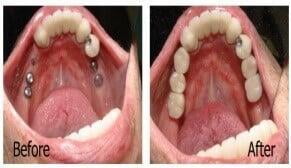
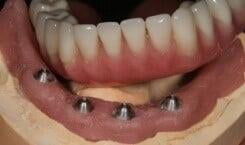
  • Replacing All of Your Teeth                                                                                                                                                                                                                                                                                                                                                              
HOW LONG DOES THE TREATMENT TAKE?
Some false teeth can now even be fitted at the same time as the implants (these are called ‘immediate implants').
Usually the false teeth are fitted 3 to 4 months after the implants are put in. Sometimes treatment takes longer and your dental team will be able to talk to you about your treatment time.

WHAT CAN you EXPECT AFTER RECEIVING A DENTAL IMPLANT?
Your own teeth require conscientious at-home oral care and regular dental visits. Dental implants are like your own teeth and will require the same care. In order to keep your implant clean and plaque-free, brushing and flossing still apply!
Periodic follow-up visits will be scheduled to monitor your implant, teeth and gums to make sure they are healthy.

ITS Dental Hopital, Greater Noida has a dedicated implantology centre and highly trained doctors, skilled at placing implants. Visit us to know more!!


     https://www.dentalhealth.org/dental-implants

Friday, January 17, 2020

Root Canal Treatment


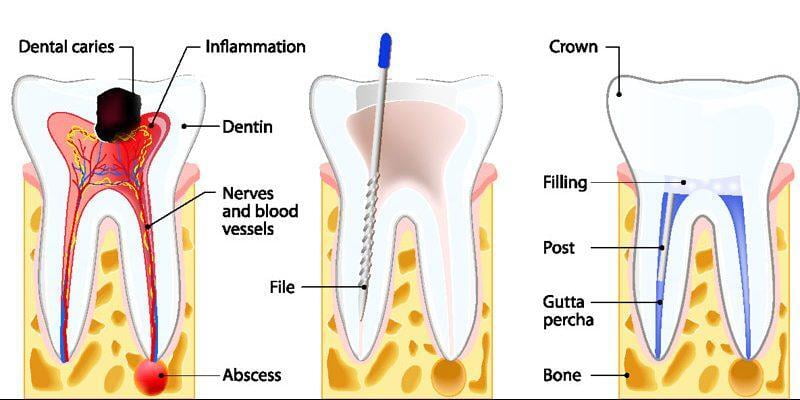
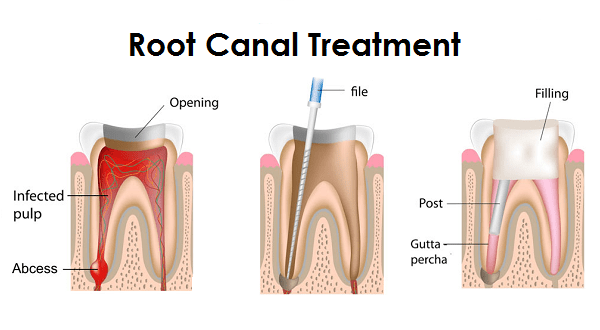
Root canal therapy, also known as endodontic therapy, is a dental treatment for removing infection from inside a tooth. It can also protect the tooth from future infections.
A "root canal" is not a treatment, but part of a tooth. It is the hollow section of a tooth that contains the nerve tissue, blood vessels, and other cells, also known as the pulp.
A tooth consists of a crown and roots. The crown is mainly above the gum, while the roots are below it. The roots attach the tooth to the jawbone.
Inside the crown and the root, or the root canal, is the pulp. The pulp nourishes the tooth and provides moisture to the surrounding material. The nerves in the pulp sense hot and cold temperatures as pain.
The name of the dental procedure commonly referred to as a "root canal" is actually endodontic therapy, which means "inside the tooth."
However, the term "root canal" has come to be commonly used to talk about the procedure.


What are the steps?

Read more

Friday, December 20, 2019

LAUGH YOUR FEARS AWAY: DENTAL LAUGHING GAS

WHAT IS LAUGHING GAS?

Laughing gas is actually nitrous oxide gas and is commonly denoted as N2O. It is a colourless, virtually odourless gas and has a very faint sweet smell.
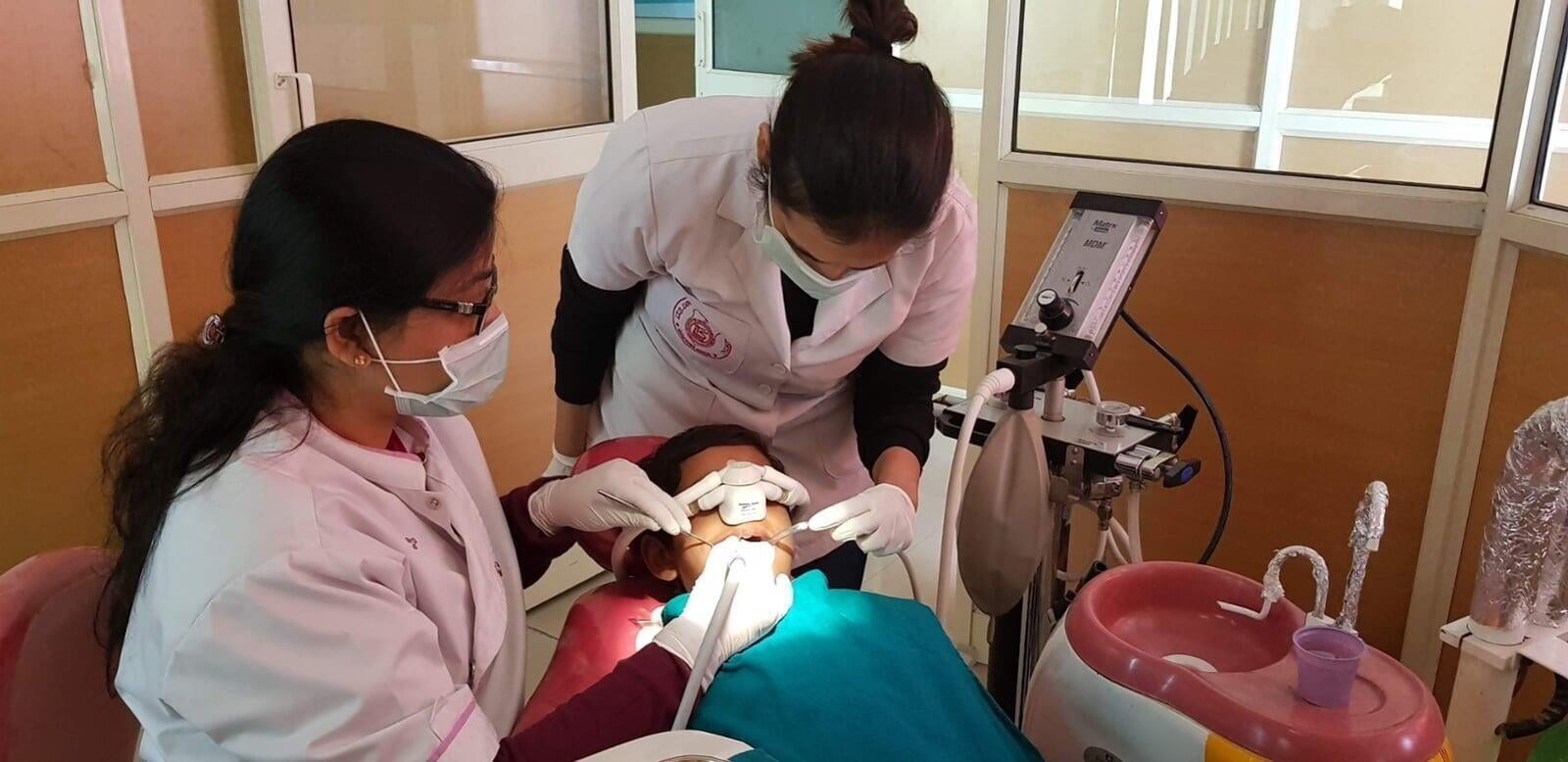
In dentistry, it can be administered along with oxygen to reduce pain and anxiety. Nitrous oxide is effective as a sedative because it relaxes the patients with the pleasurable feelings it emits. Nitrous oxide's usefulness also stems from how quickly it works and that its effects are reversible

WILL I BE UNCONCSIOUS IF NITROUS OXIDE IS USED?

No. Nitrous oxide does not cause loss of consciousness. It is a popular method of conscious sedation.

WHAT WILL I FEEL WHEN NITROUS OXIDE IS ADMINISTERED?

Your dentist will place a mask covering your nose and ask you to breathe normally. You will be able to hear and respond to any requests or directions the dentist may have. Within a few short minutes you should start to feel the effects of the nitrous oxide. You may feel light-headed or a tingling in your arms and legs. Some people say their arms and legs feel heavy. Ultimately, you should feel calm and comfortable. The effects of nitrous oxide wear off soon after the mask is removed.

IS NITROUS OXIDE SAFE FOR CHILDREN?

Nitrous oxide is not only safe , it is in fact the preferred method used especially for anxious children. It allows the child to undergo the treatment in a better manner, ensures more co-operation and may also be associated with procedural amnesia, all allowing for a positive dental attitude to be inculcated in the child.

ARE THERE ANY SIDE EFFECTS?

Only a minority of patients experience any negative side effects. They can occur if the nitrous level is too high or if the amount being inhaled quickly changes. Potential side effects are as follows:
Headaches
Shivering
Excessive sweating
Nausea and/or vomiting
Fatigue
Once the nitrous oxide has been turned off, a patient needs to receive oxygen for at least five minutes to avoid a headache or vomiting. The oxygen purges any remaining gas from the lungs while aiding the patient in becoming alert and awake.
Meals are another focus point when receiving nitrous oxide. It's a good idea to eat lightly prior to your procedure and avoid a big meal afterwards

ARE THERE ANY SITUATIONS WHERE NITROUS OXIDE SHOULD NOT BE ADMINISTERED?

Yes, please inform your dentist in the following scenarios:
COPD (chronic obstructive pulmonary disease),
Methylenetetrahydrofolate reductase deficiency
Cobalamin deficiency
If you are receiving treatment using bleomycin sulfate
Have a history of emotional issues or drug addiction
Pregnancy

The Department of Pedodontics at ITS Dental Hospital, Greater Noida has a well setup conscious sedation facility and doctors trained specifically in the technique to treat your tiny tots in the best possible, anxiety free manner.

Monday, December 16, 2019

Ortho-Brace Yourself!

Ortho-Brace Yourself!

Only a few people are lucky to be born with perfect teeth, however that perfect, functional smile can be all yours, with a good orthodontist. Braces are devices used in Orthodontics that align and straighten teeth and help position them with regard to a person’s bite, while also aiming to improve dental health.
Here is a quick look at the different types of braces that are available for different cases and age groups.

Metal Braces

These are also called ‘traditional’ braces. They have two basic components, the metal bracket that is applied to the teeth and the bendable steel wire that is put through the brackets in order to apply pressure to the teeth and ultimately move them in the bone.  Today’s metal braces are far smaller and less noticeable than they were in the past. New technology has also created wires that move teeth faster and with less pain than in years past. 
They are the least expensive version and are often the fastest way of moving teeth into their ideal locations. Many teenagers also like the ability to choose the color of the rubber bands around each bracket, as this gives each person an opportunity to personalize their braces.

Ceramic Braces

These are a  popular alternative to metal braces. The brackets are made out of a ceramic material and thus has the same color as teeth. Tooth coloured wires may also be used to make it less conspicuous. This virtually invisible system is a popular choice amongst adults. Ceramic braces work in the same way as traditional braces.

Lingual Braces

Lingual braces  are similar to traditional braces in that they are made out of metal, but they are attached to the inside of the teeth so that they cannot be easily seen from the outside. This type has the obvious advantage of not being visible to other people because they are hidden behind the teeth. However, they are less effective than traditional braces and often take longer to achieve desired tooth alignment. They may also be uncomfortable for the patient as they come into direct contact with the tongue. They also tend to be more difficult to clean.

Self-Ligating Braces

Self-ligating braces are very similar in appearance to traditional metal braces, but utilize clips rather than elastic bands to hold the wire of the brace in place. As a result, there is less friction on the braces and it is usually easier for the individual to keep the braces and teeth clean.
        

Invisalign

Invisalign is the most distinct type of braces because they do not involve brackets and wires but instead utilize a series of custom-made clear plastic aligners that are worn over the teeth and r. These aligners are easy to remove and replace with the next one in the series every two weeks throughout the treatment period.
This type of braces is preferable for many patients because they are almost invisible and allow greater freedom in eating and drinking. However, they are considerably more expensive and can only be used to correct minor to moderate dental problems in teenagers and adults.

Friday, December 6, 2019

CBCT: Imaging Beyond Dental X-Rays

CBCT: Imaging Beyond Dental X-Rays

Radiographic examination is essential in diagnosis and treatment planning in dentistry. The interpretation of an image can be altered by the anatomy of both the teeth and surrounding
structures. The amount of information gained from conventional x rays is limited.

Thus came into play, the dental cone beam computed tomography (CBCT), which is  a special type of x-ray machine used in situations where regular dental or facial x-rays are not sufficient.  With cone beam CT, an x-ray beam in the shape of a cone is moved around the patient to produce a large number of images. CBCT produces high-quality images.

Patient Preparation

A cone beam CT examination requires no special preparation. Prior to the examination, the patient may be asked to remove metal objects, such as jewelry, eyeglasses, hairpins and hearing aids. Although removable dental work may need to be removed, it is advisable to bring these along, as the dentist may need to examine them.
Women should always inform their dentist if there is any possibility that they are pregnant. 

Uses of CBCT:
​1. Implantology

CBCT can give a clear picture about the quality of bone in which the implant is to be placed, the placement in relation to the surrounding structures and in cases where bone reconstruction may be required.

2. Surgery

This imaging modality allows for better diagnosis of tumors or cysts, the relationship of teeth to structures such as nerves, the presence and extent of impaction of teeth, extra teeth, foreign bodies, etc. With the correct knowledge about the presence, extent and relation of these structures, the oral surgeons are better equipped to deal with these anomalies.
.

3. Trauma

CBCT is able to show a larger number of fracture lines and fractures when compared with conventional images, depicting precisely the position and orientation of displaced fragments in a reasonably short time interval.
These could be tooth and socket fractures, fractures of the orbit, fractures of the jaws or any other structure of the face and oral cavity.

4. Orthodontics

While planning orthognathic surgeries, to evaluate the amount of airspace, to evaluate clefts in the palate, for analysis of facial structures, teeth and jaws, to place braces, to assess facial growth, age or disturbances in the eruption of teeth.

5. Endodontics

To evaluate the presence of superimposed or extra root canals, the presence of infection or pathologies around the tooth root.

6. Periodontology

 CBCT allows for highly accurate analysis of bone loss as well as bone healing after periodontal treatment or regenerative therapy. 

7. Forensic Dentistry

CBCT was established as a non-invasive method to estimate the age of a person based on the pulp–tooth ratio.
The team at ITS Dental College Greater Noida is highly trained and equipped in the techniques of CBCT imaging, analyzing these images and providing the best possible treatment for our patients accordingly!


Sources:
Alamri HM, Sadrameli M, Alshalhoob MA, Sadrameli M, Alshehri MA. Applications of CBCT in dental practice: a review of the literature . 2012;60(5):390-400.

Shanmugasundaram Karpagavalli. Application Of CBCT In Dentistry 2011. J Indian Acad Oral Med Radiol. 23. 163-167

POPULAR COSMETIC DENTISTRY TREATMENTS: WHAT YOU NEED TO KNOW

  Your smile is one of the first things people notice about you. The constant search for obtaining that perfect smile has made cosmetic dent...